
Restaurant Floor Cleaning: A Guide to Degreasing Kitchens, Bars, and Quarry Tile
· By Walace Fernandes
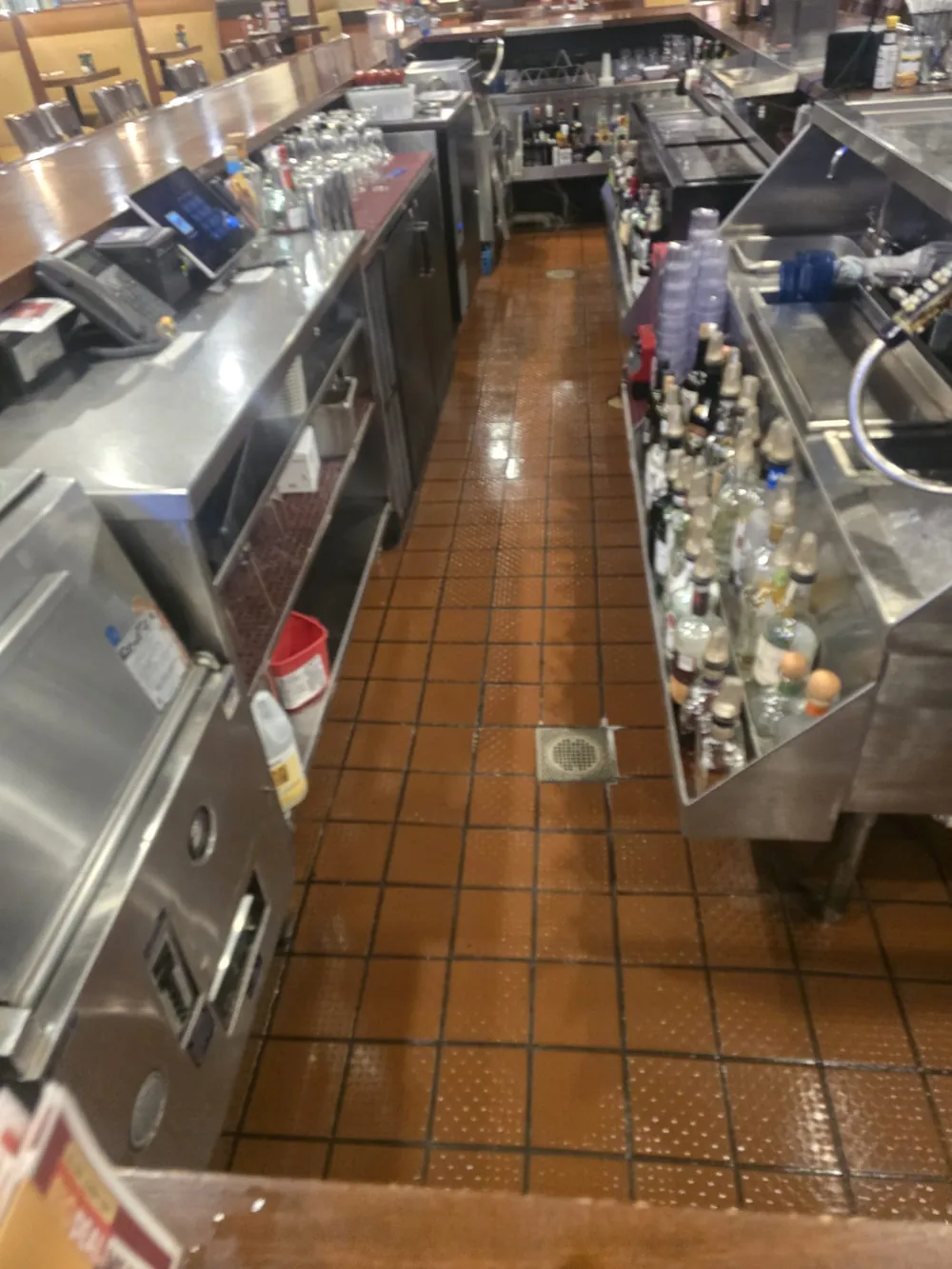
Ask anyone who has closed a kitchen at night and they will tell you: the floor is the hardest surface in a restaurant to keep truly clean. Staff mop every shift, yet the tile slowly turns darker, the grout goes black, and the floor near the fryer or the dish pit feels slick no matter how much water goes down. Behind the bar, spilled syrups, beer, and juice leave a sticky layer that pulls dirt in with every step.
This guide explains why restaurant and bar floors get that way, how professional degreasing actually works on quarry tile and other common surfaces, and how often food-service businesses usually schedule it. It is based on the kind of floors we clean regularly at WVF Cleaning Services Company in the Capital Region.
Why mopping alone does not keep a restaurant floor clean
A string mop and a bucket move dirty water around. In a kitchen, that water carries emulsified grease, and as the mop passes over the floor, it leaves a thin film behind. Over days and weeks, those films stack up, trap dust and food particles, and settle into the low spots: grout lines, textured tile, and the edges along equipment and walls.
The result is a floor that looks clean right after mopping but darkens quickly, smells sour near drains, and feels slippery underfoot. That slickness is not just cosmetic. A grease film on tile is one of the most common contributors to slips in commercial kitchens, which is a real concern for staff safety.
Understanding quarry tile
Quarry tile is the red or brown unglazed clay tile found in many commercial kitchens. It is durable and naturally slip-resistant, which is why so many restaurants use it. But because it is unglazed and slightly porous, and because its grout lines are usually wide, it absorbs grease and holds dirt more than a glazed surface does.
When quarry tile is clean, it has an even, matte color. When it is loaded with grease, it turns darker and blotchy, and the grout can look almost black. Cleaning it properly means breaking down the grease in the pores of the tile and in the grout, then physically scrubbing it out and removing all of the dirty solution, not just spreading it around.
How professional degreasing works
The process has a few clear steps. First, the floor is cleared as much as possible and dry debris is swept up, including under and around equipment that can be reached safely. Then a degreaser made for food-service soils is applied and given time to work. That dwell time matters, because the chemistry needs a few minutes to break the bond between grease and tile.
Next comes agitation. This is where the real cleaning happens: stiff deck brushes or a floor scrubbing machine work the solution into the surface and the grout lines. You can usually see the foam turn brown or gray as it lifts the buildup. Edges, corners, and the base of equipment get extra attention because mops rarely reach them.
Finally, the dirty solution is removed completely, with a squeegee toward the drains or with a wet vacuum, and the floor is rinsed so no residue is left behind to attract new dirt. Skipping the rinse is one of the most common mistakes, because leftover degreaser and grease simply dry back onto the tile.
Bar floors and service aisles
Bar floors have their own problem: sugar. Spilled cocktails, soda, syrups, and beer dry into a sticky layer that holds grit and makes mats and tile feel tacky. Add the foot traffic of a busy night and the service aisle behind the bar can get dark quickly.
The approach is similar to kitchen degreasing, with attention to the rubber mats (which should be lifted, cleaned, and dried separately) and the floor underneath them, where moisture and residue tend to collect. Under the bar stools on the guest side, tile and grout also take a beating from spills and shoes, and they benefit from the same scrub and rinse.
Dining rooms and front-of-house floors
Dining room floors usually see less grease than the kitchen, but they still collect tracked-in dirt, food, and spills, especially near the kitchen doors where grease travels out on shoes. In the Capital Region, winter adds road salt and sand at the entrance, which can leave a white haze on tile and wear down finishes.
Front-of-house floors are what guests notice first, so a periodic deep scrub keeps them looking consistent between nightly cleanings. Work is typically scheduled after close or before opening so the floor has time to dry completely.
How often should restaurant floors be degreased?
Most restaurants mop nightly, and that daily routine is important. A professional deep degreasing on top of that is usually scheduled based on volume and menu. High-volume kitchens with fryers and grills often benefit from a deep clean every few weeks, while lighter kitchens may go longer between visits.
A simple signal: if your grout has gone noticeably darker than your tile, or the floor still feels slick after it dries, it is time. After the first deep reset, a regular schedule keeps the buildup from coming back to that level, and each visit tends to go faster.
Scheduling around service
Floor degreasing needs the floor clear and dry time afterward, so it is usually done overnight after close or early before prep starts. Before a visit, it helps to have staff clear loose items off the floor, empty floor-level shelving where possible, and let the cleaner know about any drains that run slow.
WVF Cleaning Services Company is owner-led and based in Watervliet, and we clean restaurant, bar, and commercial kitchen floors across Albany, Troy, Saratoga Springs, and nearby towns. If your floors need a reset, text us at (518) 720-2726 or use the form on this site with a few details about your space, and we'll send you a quote.
Frequently asked questions
- What is the best way to clean quarry tile in a restaurant kitchen?
- Sweep, apply a degreaser made for food-service soils, let it dwell, scrub with a stiff brush or floor machine into the tile and grout, then remove all dirty solution and rinse. Mopping alone tends to spread grease rather than remove it.
- Why is my restaurant floor still slippery after mopping?
- Mopping often leaves a thin film of grease behind. Over time those films build up into a slick layer. A deep degreasing with scrubbing and a full rinse removes the film instead of spreading it.
- Can you clean restaurant floors after closing time?
- Yes. Floor degreasing is usually scheduled after close or before opening so the floor is clear during the work and has time to dry before service.
- Do you clean bar floors and rubber mats?
- Yes. We clean bar floors and service aisles, including the tile and grout under the mats where sticky residue collects. Text (518) 720-2726 or use the form for a quote.
Related services
Want a real number for your space?
Text us what needs cleaning, the size of the space, and your town. We reply with a clear quote.